
Research
Our lab studies how macroscopic (millimeter-centimeter scale) objects move, interact, and organize themselves when coupled through a shared medium. Most of the systems we work with fit on a benchtop: millimeter-sized particles floating on a vibrating liquid bath, 3D-printed vibrots shaken on a plate. In each case, individual units convert an energy source into motion, and the medium between them (a wavefield, an elastic beam, contact forces) mediates interaction. We approach these problems through a combination of tabletop experiments, mathematical modeling, and simulation, with experiments telling us what a system does and reduced models telling us why and which ingredients are essential. A recurring theme is that these macroscopic systems serve as accessible analogs for phenomena usually studied at microscopic scales, from synchronization and self-assembly to pattern formation. Given the setups mainly using a combination of 3D-printed or laser-cut parts, the investigations can function as relatively low-cost teaching tools, which is why pedagogy sits alongside the fundamental physics as a research direction of its own. A list of publications, classified by the three themes below, is available on the Publications tab. Check them out!
The current lab guidelines and expectations can be found here.
Active and Driven Matter
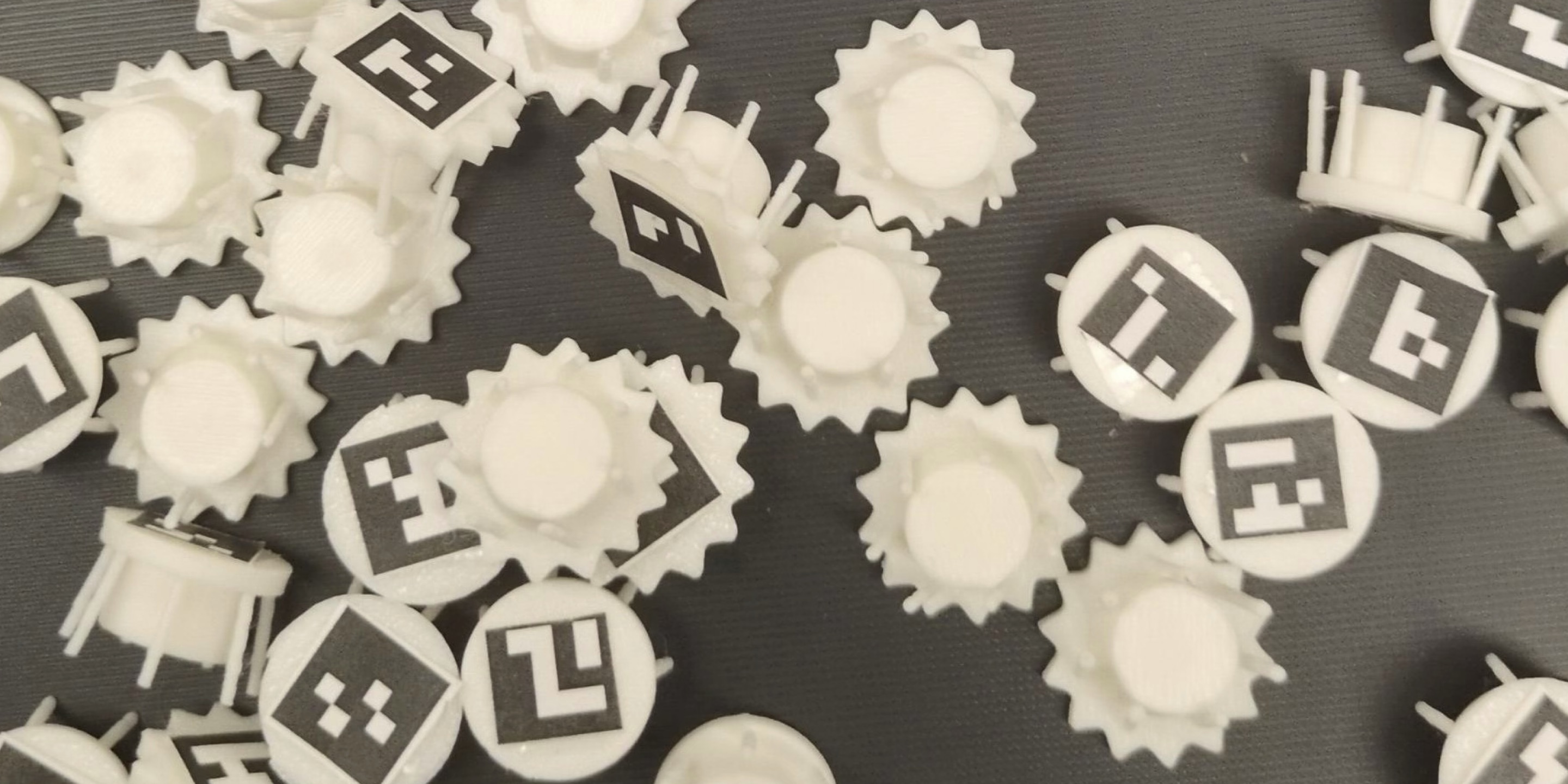
Active matter is made of units that consume energy to move. In the systems that we study, energy usually arrives from outside, delivered by vibration, chemical release, or an imposed field, which makes the behavior tunable in ways that animate (living) active particles are not. One system we focus on is wave-propelled capillary-scale spinners: chiral, millimetric objects floating on a vibrating bath that radiates waves and rotate. When several spinners share an interface their wavefields couple them, and they synchronize, lock at particular phase differences depending on spacing and initial conditions, assemble at preferred separations, and in some cases orbit a common center. With an understanding at the single- and two-particle level, we are now interested in looking how large collections of such objects self-organize and could potentially be designed for particular functions. Further, we are interested in exploring dry systems in tandem, such as those governed by steric and/or elastic interactions. A recent overview on the wave-propelled interfacial active system can be found here: Propulsion and interaction of wave-propelled interfacial particles (Physical Review Fluids, 2025)
Related Press: Plastic 'Pac-Man' moves using water ripples (New Scientist, 2022), Behind the Paper (Nature Physics Community, 2023), Floating in Sync (FYFD, 2023), V006: Sync or Swim, Division of Soft Matter Gallery of Soft Matter
Interfacial Fluid Mechanics
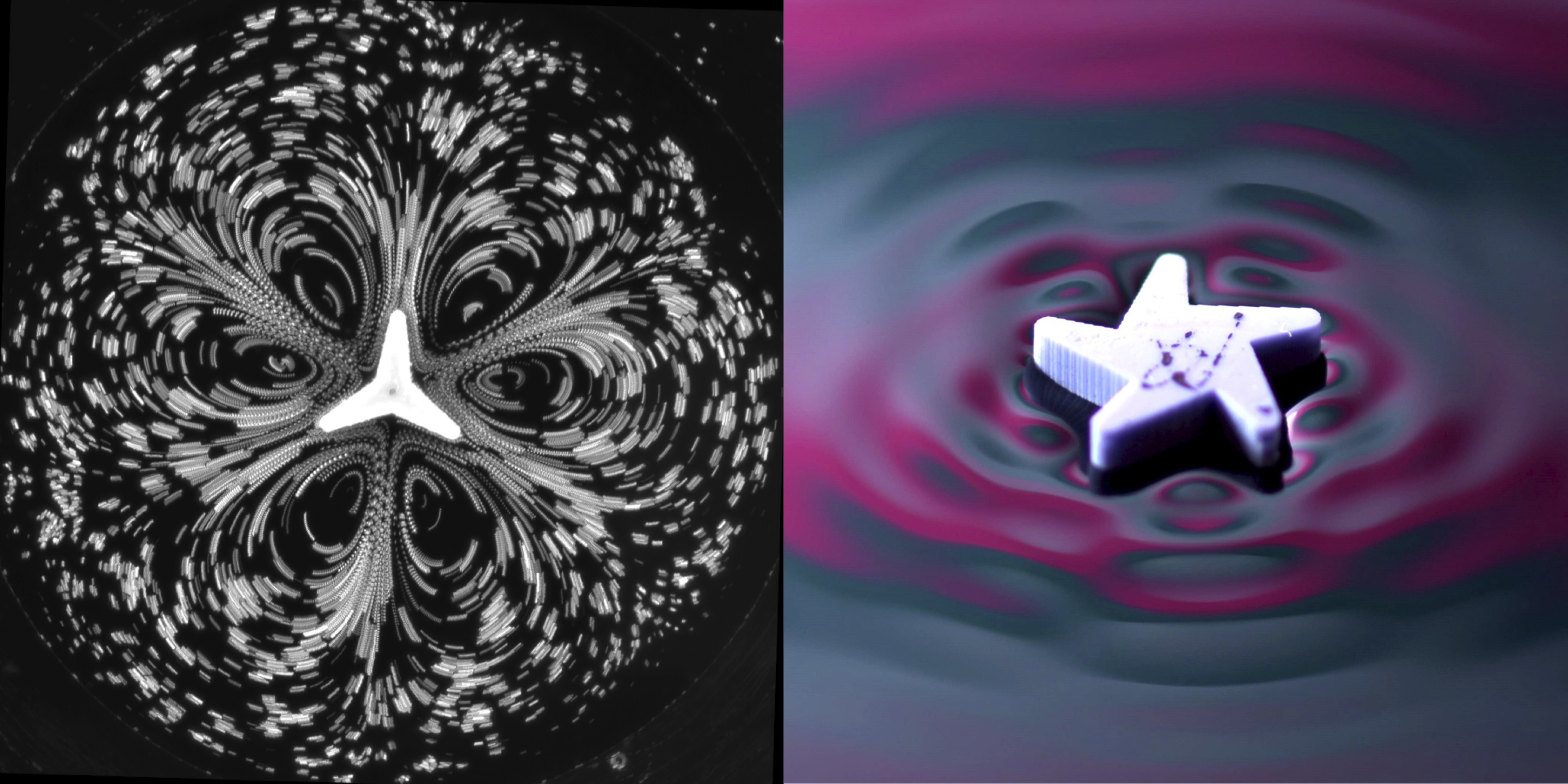
At millimetric scales and below, surface tension is a dominant force, and the shape of a liquid interface dictates how objects float, attract, repel, bounce, and assemble. One of the current themes of research is on the introduction of a dynamic interface via waves: how waves scatter off floating bodies and boundaries, how nonlinear interactions at the surface give rise to steady flows, and how a driven interface can be used to rearrange the objecting floating on it. Throughout, we treat the interface as a versatile platform for studying pattern formation, self-assembly, and wave-mediated interaction, and we pair experiments with models that capture the essential mechanics.
Press and expository writing: APS DSOFT Gallery of Soft Matter (PRE Editorial, 2023), Prizes for Breakfast Cereals and Bubble Tears (APS, 2023), Mermaid Cereal (FYFD, 2023), V007: Mermaid Cereal, winning entry, Division of Soft Matter Gallery of Soft Matter
Physics Pedagogy
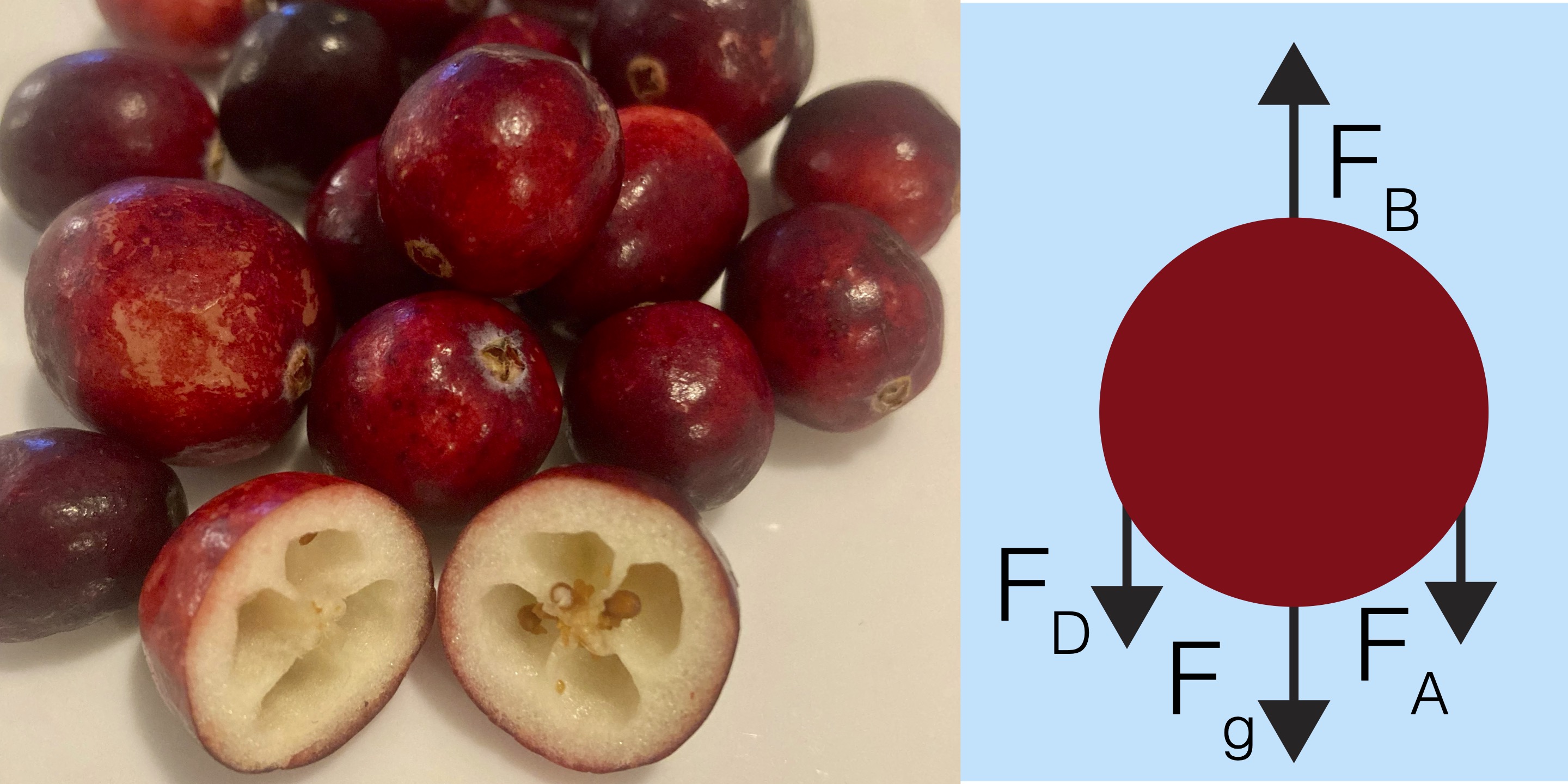
The systems we study are cheap, visual, and exist on length and time-scales visible to the naked eye, which makes them good teaching material, and we treat their development as scholarly work in its own right. Recent efforts include a set of connected problems drawn from cranberry harvesting, following a berry from its buoyant rise through a flooded bog to capillary aggregation at the surface to the angle of repose of a pile, each modeled from first principles. Other examples include using a Faraday wave field generated on a loudspeaker to reproduce underdamped Brownian motion, with the ballistic-to-diffusive crossover measurable from video shot on a phone. In general, the spirit here is to share our interests from the lab with the broader community of science educators.
Laboratory Collaborations
- Anand Oza (New Jersey Institute of Technology)
- Caroline Barotta (Brandeis University)
- Daniel M. Harris (Brown University)
- Giuseppe Pucci (National Research Council of Italy)
- Nilgun Sungar (Cal Poly San Luis Obispo)
- Ousmane Kodio (UC Santa Barbara)
- Robert Hunt (University of Chicago)
- Roberto Zenit (Brown University)